When preparing and serving food at church and community events, there are some things that you must do to make sure that the food is safe to eat.
There are two to four million cases of foodborne illness in Australia every year. Illnesses such as food poisoning are becoming more common as our lifestyles change – for one thing, we eat out more. However, it is estimated that one in five occurs from incorrect food handling in the home!
One of the reasons for this is that you cannot always tell by looking at food, smelling it, or tasting the food whether it contains dangerous levels of food poisoning organisms. Most food poisonings are a result of mishandling food – keeping it at the wrong temperature, cross-contamination, and incorrect reheating.
Remember, food safety applies to ALL foods – the important point is to treat all foods with care. Food safety is mostly common sense, and this basic course will help you do the things needed to make and keep food safe.
In general, most churches have few regulations when it comes to food that is not sold (for example, church lunches). However, each state or council can be different in the criteria it sets up for organisations. Sometimes, the facility where you hold your event, including church kitchens, must be registered as food kiosks. Check your local council as your church may require someone with formal safe food handling certification as outlined in the Food Standards Australia New Zealand Act 1991.
People get sick from food because the food they have eaten contains bacteria, viruses, toxins, contaminants or harmful chemicals. It can take from an hour to a few days to develop food poisoning, depending on the cause, but the best way of preventing food poisoning is to use safe food handling practices.
Bacteria are the biggest problem, because they are so common, and are found in soil, on animals, people and even their clothes. In the kitchen, bacteria often come from raw vegetables and raw meat. Sometimes bacteria can move from these raw ingredients to cooked food, in a process called cross-contamination. Even though most church food is vegetarian, it is still important to maintain strict food hygiene laws.
Some ways that these germs can move from dirty to clean surfaces include:
Food poisoning bacteria are often naturally present in food, and in the right conditions a single bacterium can multiply into more than two million bacteria in just seven hours. So it is very important not to give bacteria the conditions under which they multiply rapidly which include:
Personal Hygiene
One of the keys to safe food is good personal hygiene practices by the people who prepare and serve it. The bacteria that can cause food poisoning can easily transfer from the hands and clothes of the people who handle food.
As well as hands, clothes and other body parts, hair and jewellery can contain and spread bacteria to food.
Important too, is the health of the people handling food. People with illnesses and those with wounds like cuts and scratches can spread illness.
Money can also carry germs, so handling cash should be done by people that are not handling food. Cashless payment is always recommended in today's climate!
Some important practices for personal hygiene include:
Hand washing
Always wash hands before handling food. Wash them thoroughly, remembering the back of hands, wrists, between fingers and under your fingernails using a dry brush if needed. Use soap and warm water for thorough hand washing, then dry them with a disposable dry paper towel.
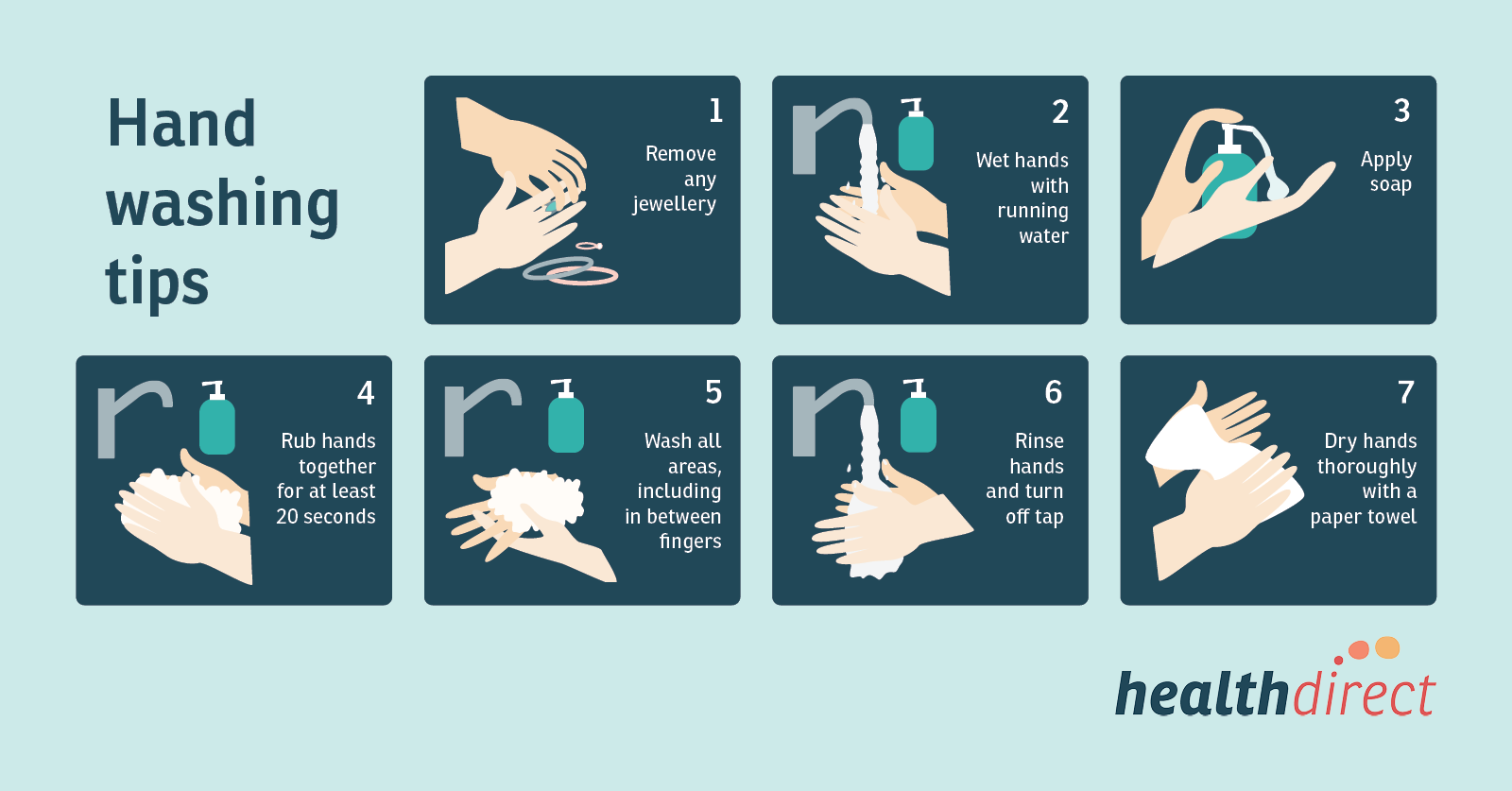
Wash your hands EVERY TIME YOU:
Personal cleanliness
Tie back long hair or cover it. No one wants to find hair in their food! Wear clean, protective clothing over your normal clothes or a uniform. Jewellery should be limited to plain bands i.e. wedding bands. If wearing a ring, gloves should be considered to limit the food from getting caught under the ring and risk cross contamination.
Clean personal behaviour
When handling, preparing or selling food, do not smoke, drink or chew gum. Do not touch or brush your hair or face, eat or spit.
Managing illness or injury
Any wound or cut on your hands or arms should be completely covered with a brightly coloured bandage or wound strip. If the wound is on the hands you should wear disposable gloves that cover the wound strip and change both glove and wound strip regularly.
If someone is sick or suffering from a disease that might be transmitted through food they SHOULD NOT WORK. If they have been vomiting or suffering from diarrhoea at any time in the TWO days prior to the event, they should be replaced and not be involved in any food preparation or handling.
COVID-19
In the current climate of the world with regard to COVID-19, Part 2 of our food safety basics is of utmost importance. The best chance we have of not transmitting this virus is by limiting its opportunity through poor hygiene and behaviours. We look further at COVID-19 in Part 5.
IF YOU FEEL THAT YOU CANNOT ENSURE THAT YOUR ENTIRE TEAM WILL TAKE EVERY PRECAUTION THEN ALL FOOD SERVICE SHOULD BE SUSPENDED.
Food Safety Procedures - Food Premises
Permanent Kitchens - If your church uses a more permanent kitchen, like a community hall, the food handling processes and operations need to be organised so the food served is safe.
In your safe food kitchen you will need:
Temporary Kitchens - You must take special care at temporary premises to keep food safe, protecting it from sunlight, dust, insects and handling by customers.
The following issues need to be considered when working in temporary food premises:
Food Safety Procedures - Food Preparation
Nearly all food contains bacteria and sometimes these bacteria can cause food poisoning. Food has to be handled correctly to make sure that it doesn't become contaminated and that the bacteria in it doesn't get a chance to increase in number and become harmful.
Receiving food - Keeping food safe starts from the moment that the food arrives from the stockists, whether that be a commercial contract or a trip to the local supermarket.
If you are buying perishable food you must make sure it arrives in a refrigerated food container or vehicle and check the temperature of deliveries when they arrive.
If you are purchasing from the local supermarket then proper cooler bags are required to store the food whilst travelling to the food storage area - much care must be taken here ensuring the food is kept at the correct temperature (more on this in the temperature checking section)
Dry goods like bread, staple ingredients or canned foods should be in good condition without torn packaging or heavily dented cans.
Preparing food - Because it is easy to transfer bacteria from raw to cooked food, it is important to have separate utensils, including cutting boards and knives for raw and cooked food. If this is not possible you must thoroughly wash and sanitise them before switching from raw to cooked food.
Wash all fruit and vegetables in clean water before using them.
Do not use food from damaged packaging - dented cans, torn packaging, leaking bottles/containers and cracked eggs.
Do not let raw food or raw food juices come into contact with cooked food to avoid cross-contamination.
Handling food - Raw food that is going to be cooked can be handled with bare hands. Cooked or ready to eat food should NOT be handled with bare hands. Use tongs, spatulas, spoons or cover hands with disposable gloves.
Change disposable gloves:
DISPOSABLE GLOVES SHOULD BE PURCHASED IN BULK AND FREELY AVAILABLE TO ALL THE TEAM.
Cooking and heating
Preparing food at home - The golden rules for preparing food at home to bring along to functions are:
High-Risk Foods - Examples of 'high-risk foods' include dairy (custards, cream cakes, unbaked cheesecakes, soft cheeses), egg products (mayonnaise), small goods (ham, salami, strasbourg), and processed meat products like pate. Foods which would not be included in this group are dried food powders in their original package, jars, cans or other containers of food which have been processed by heat.
Food Storage, Display, Transport, Cleaning and Temperature Checking
All food contains bacteria, some of which can cause food poisoning. If bacteria are given the right conditions, they can multiply very quickly and become dangerous. Temperatures of between 5 and 60 degrees Celsius are known as the danger zone so it is very important that in storing and displaying foods they spend as little time as possible at these temperatures.
Food Storage Temperature - Foods that contain meat, dairy or fish (not already processed by heat) are 'high-risk' foods and must be stored at the correct temperature. This means:
Defrost freezers regularly and don't overload them as this sometimes causes frosting. Check the temperature of refrigeration equipment with a calibrated thermometer regularly.
Time - Do not keep food in storage for too long. Note the dates that food was purchased or prepared. Remember the 'first in first out' rule for food rotation. Chilled food should not be out of refrigeration for very long. Throw chilled food out after it has been at room temperature for two hours or longer. Only keep enough food at room temperature that can be used within two hours.
Contamination - Store raw food separately from cooked food, or below it, so that no drips can fall from the raw food on to the cooked or ready to eat food. Cover all food with lids, foil or plastic wrap. Do not keep unused food in an opened can - transfer it to a suitable container. Chemicals, cleaning equipment and personal belongings must be stored away from food.
Displaying Food - Sometimes we display food when it is available for purchase or before serving and it is important to observe the following guidelines:
Transporting Food - Food that is delivered to you should come in a food transport vehicle designed to keep food safe and clean. If using a private vehicle, the food area should be free of dirt, dust and animal hairs. There should never be any animals in a food transport vehicle.
Raw food should be wrapped or in bags and ready to eat food should be covered and secured within an Esky. Food which has to be kept cold should be transported at the correct temperature using an Esky with ice packs or refrigeration unit.
Cleaning - Keeping the kitchen or food preparation area clean is one of the best ways of avoiding food contamination. Clean means clean and sanitised surfaces with no dirt, no left-over food and no vermin or insects.
You can make sure the kitchen is really clean by conducting regular cleaning programs:
You will need to prepare a regular cleaning schedule that shows:
Paper towels are better for cleaning than cloth. If you use cloth, make sure that they are washed in hot water after every use. Store chemical and other cleaning equipment away from food preparation areas.
Six steps to good cleaning:
Temperature Checking - keeping food at the right temperatures is very important to stop bacteria from growing.
Remember:
To make sure that food is at the correct temperature, you need to check temperatures regularly and to do this properly you will need an accurate thermometer. You can check the accuracy of your thermometer yourself using the following procedure:
COVID-19
The best ways to prevent the community spread of coronavirus disease (COVID-19) are for everyone to maintain effective hygiene and follow social distancing rules.
The Food Standards Code requires food businesses to take all practicable steps to prevent contamination of their food service or processing environment.
Maintaining effective hygiene includes:
You must ensure you are cleaning and sanitising the following, regardless of COVID-19:
We advise you to review your cleaning and sanitising practices to ensure general surfaces are also cleaned frequently and effectively. These include:
Check if you are covering the Australian Government Guidelines for routine environmental cleaning on the Department of Health website. You should add anything to your standard procedures for cleaning and disinfection of your business premises if necessary.
In the event of COVID-19 exposure, a more thorough and extensive cleaning and sanitising regime may be required.
For guidance see cleaning and sanitising for food businesses in response to COVID-19 exposure (771 KB).
Food handlers must take all practicable measures to prevent contamination of the food service or processing environment. They must maintain good personal hygiene including regular handwashing.
Employees showing symptoms of COVID-19 must not attend work. Symptoms include fever, coughing, sore throat, fatigue, and shortness of breath. We recommend you review the health of all employees daily.
Food handlers who know or suspect they are unwell with COVID-19 or other illness must report this to their supervisor.
You must exclude unwell food handlers from food handling activities or from the workplace entirely. This exclusion must be until they are professionally deemed safe to return to work, with guidance from health authorities.
Normal best-practice prevention measures will reduce the risk of transmitting COVID-19, and foodborne diseases like norovirus and salmonellosis:
In many businesses, particularly food manufacturers, staff routinely wear personal protective equipment such as protective clothing and gloves. With correct use these can help prevent transmission of infectious diseases.
Everyone in the community has an obligation to stay home while they have any symptoms such as fever or coughing. Businesses have the right to refuse service and insist that anyone with these symptoms leaves the premises.
Personal and equipment hygiene must be maintained at all times.
In response to COVID-19 local food enforcement agencies may have their own requirements or advice.
Read our InfoBites factsheets for further information on routine health and hygiene requirements, and cleaning and sanitising.
Information on a wide range of topics relevant to all businesses can be found on the Safe Work Australia website.
Read more topics on Novel Coronavirus and Food Safety.


The North New South Wales Conference of the Seventh-day Adventist Church acknowledges the First Nations People as the traditional custodians of this land. Read here the full acknowledgement.