Risk management is an important process that safeguards the church, its workers, members and guests. It is a legal requirement and compliance helps you focus on the dangers that really exist in the environment and have the potential to cause real and lasting harm.
The law does not expect you to eliminate all risk, but you are required to "as far as reasonably practicable" make efforts to protect people and reduce the danger.
Risk management is about being pro-active in keeping people safe not re-active once someone has been injured or killed.
What is the difference between a hazard and a risk?
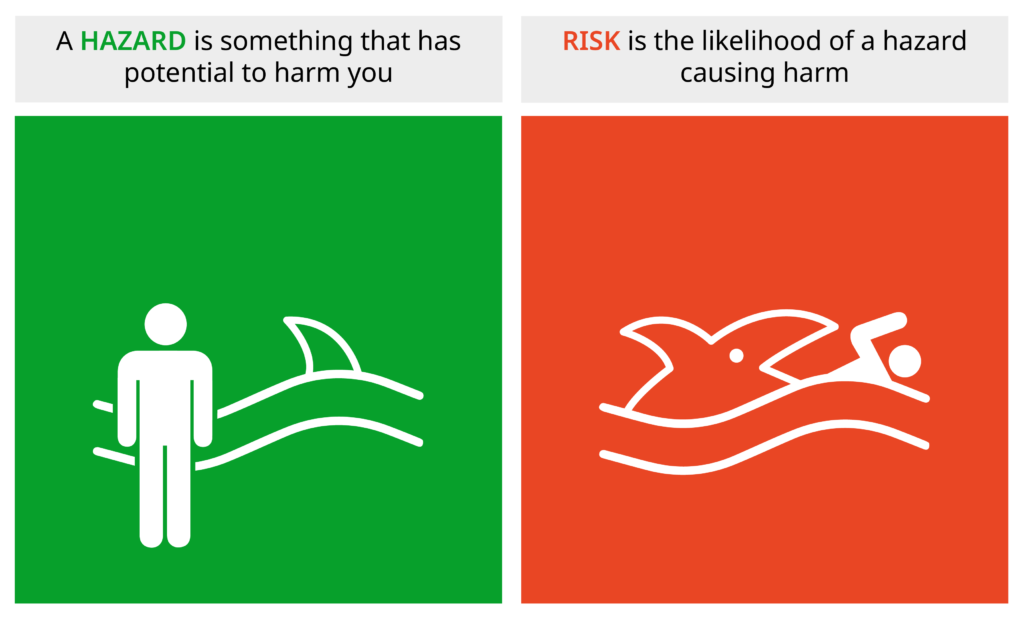
Hazards and risk are not the same things. A hazard is an act or condition that has the potential to cause damage to plant or equipment or result in illness or injury. A risk is the likelihood of a specific consequence occurring and determining to what degree.
There are three main stages to risk management;
A systematic approach to the management of hazards and their associated risks.
The aim of this process is to minimise the likelihood or consequence of a particular risk to a level that is minimal and acceptable. The risk management process includes;
Hazard Identification
This is an important part of risk management as without the identification of the hazards the risks cannot be managed. This is the process of examining each area, including but not limited to, the access and egress, pathways, equipment, office areas, the kitchen and food storage areas, the grounds, etc. etc.
Here are some tips to help you identify hazards;
Remember that hazard identification, assessment and control is an ongoing process and is best done in consultation with all stakeholders i.e. facility personnel, neighbours or sharers of the site, frequent visitors or contractors and tenants. It should be undertaken at various times such as;
Other hazards
In today's climate, it is important to remember that hazards are not conditions that are limited to physical illness or injury. A hazard can include conditions such as;
The Seventh-day Adventist church, through Adsafe, provides protective services for children and people at risk, with specific emphasis on sexual, physical and mental abuse. As well as managing and supporting people affected by abuse, Adsafe seeks to mitigate risk by requiring all adults aged 18 and over who are volunteering/working with children aged under 18, plus church leaders (Elders and Board/Leadership Members) to undertake three requirements:
The on-line learning portal is located at: https://elearning.adsafe.org.au/ Further information about Adsafe can be found on their website at: www.adsafe.org.au
Adsafe can be contacted toll-free on 1800 220 468 or by lodging an on-line enquiry.
Risk Identification
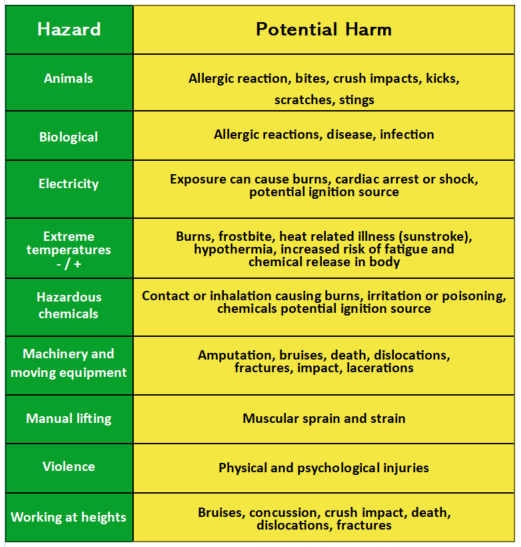
Once a hazard has been identified, it is paramount that the risks associated with said hazard are investigated. There may be contributory factors that may not be obvious which is why we perform a risk assessment. Here are some examples;
Risk Assessment
It is now necessary to gauge the likelihood of an injury occurring alongside the probable consequences. A risk assessment will outline these key factors;
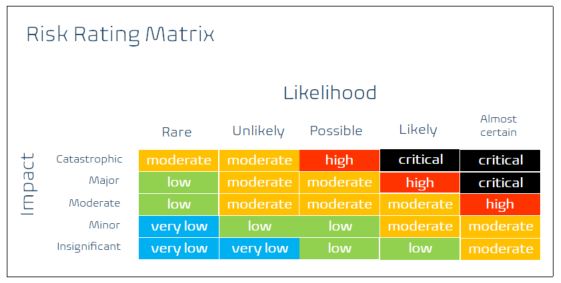
Risk Rating Matrix
Using the risk rating matrix will help you to decide what action needs to be taken as any residual risk after controls have been applied must be in the low and very low range.
Risk Control
When applying controls to a potentially risky environment/activity, it is important to know the level of authority you have. Urgent action is required for risks assessed as having Critical or High consequences. These actions may include;
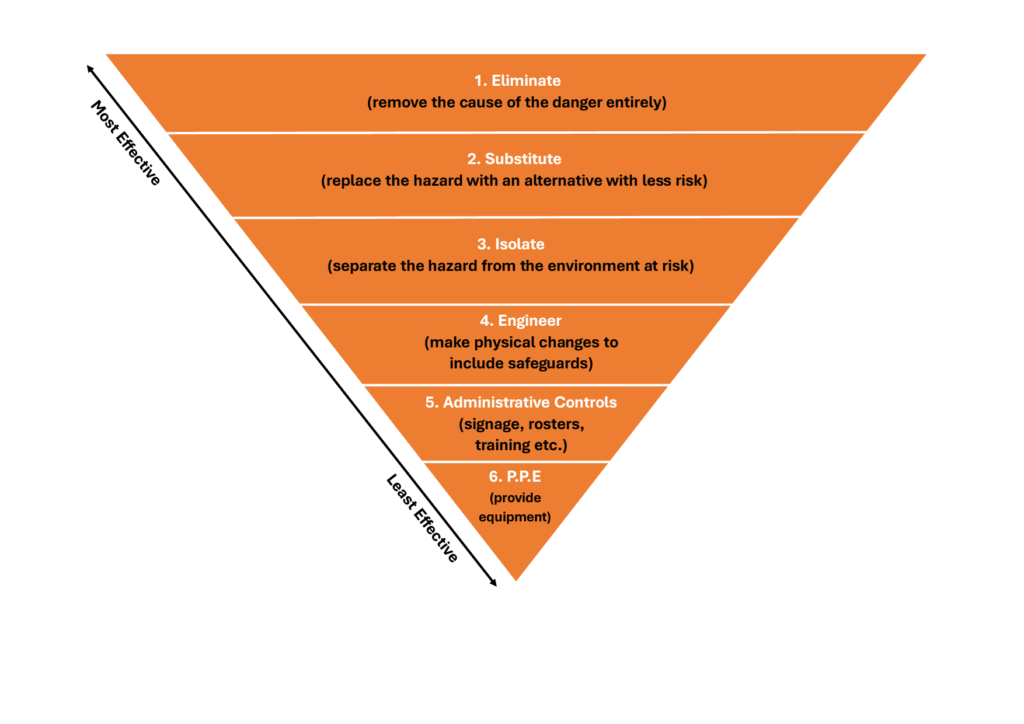
The Hierarchy of Controls (pictured above) is applied to decide the measures used to reduce/eliminate risk. Control of any given risk generally involves multiple measures and should always aim as high on the list as practicable.
Implementing and Documenting Controls
Always remember to prioritise the most important things first. i.e. Hazards that have moderate to critical risk rating - think about consequences that could result in death or permanent disability.
All stakeholders should be aware of any controls that have been implemented. Communication should include;
Documentation is one of the most important steps in risk management. This ensures that all stakeholders know what has been used, what has worked and what caused further risk and was rejected for more effective controls. Adequate record keeping will also demonstrate due diligence in the event of an investigation or legal proceedings and the question of liability arises.
Records should demonstrate the proper process and include information about the hazards, associated risks and the control measures implemented. Including any evidence is also important. i.e. risk assessments, safe work method statements (required for high-risk work), minutes from meetings, email communique, photographs, checklists, log books, etc.
Monitoring and Reviewing
The monitoring of the controls implemented, as suggested above, is important to ensure that they are not contributing to the worsening of the original hazard or creating new ones.
This monitoring goes hand in hand with the review of risk management. It should happen when there is a change to the workplace including systems, tools, machinery, equipment or when the validity of the process is potentially out of date - you can check out our resources page for templates.
Further Support
Please make contact with the North New South Wales Conference for further support and assistance should you require it. Contact us on (02) 4951 8088 or email the Conference Safety Coordinator at [email protected]
Don't forget to follow onto the next tab and check out the resources there for you and your church.
You can also register for your certificate there with your name and email address and your Certificate of Completion will be sent to you. Thank you for keeping your church safe.
