Personal Hygiene
One of the keys to safe food is good personal hygiene practices by the people who prepare and serve it. The bacteria that can cause food poisoning can easily transfer from the hands and clothes of the people who handle food.
As well as hands, clothes and other body parts, hair and jewellery can contain and spread bacteria to food.
Important too, is the health of the people handling food. People with illnesses and those with wounds like cuts and scratches can spread illness.
Money can also carry germs, so handling cash should be done by people that are not handling food. Cashless payment is always recommended in today's climate!
Some important practices for personal hygiene include:
Hand washing
Always wash hands before handling food. Wash them thoroughly, remembering the back of hands, wrists, between fingers and under your fingernails using a dry brush if needed. Use soap and warm water for thorough hand washing, then dry them with a disposable dry paper towel.
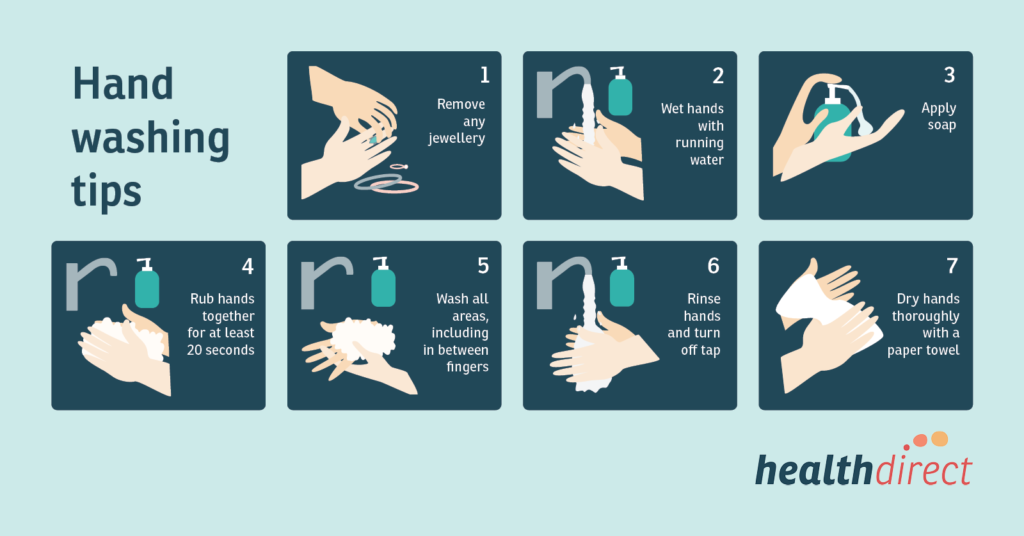
Wash your hands EVERY TIME YOU:
Personal cleanliness
Tie back long hair or cover it. No one wants to find hair in their food! Wear clean, protective clothing over your normal clothes or a uniform. Jewellery should be limited to plain bands i.e. wedding bands. If wearing a ring, gloves should be considered to limit the food from getting caught under the ring and risk cross contamination.
Clean personal behaviour
When handling, preparing or selling food, do not smoke, drink or chew gum. Do not touch or brush your hair or face, eat or spit.
Managing illness or injury
Any wound or cut on your hands or arms should be completely covered with a brightly coloured bandage or wound strip. If the wound is on the hands you should wear disposable gloves that cover the wound strip and change both glove and wound strip regularly.
If someone is sick or suffering from a disease that might be transmitted through food they SHOULD NOT WORK. If they have been vomiting or suffering from diarrhoea at any time in the TWO days prior to the event, they should be replaced and not be involved in any food preparation or handling.
COVID-19
In the current climate of the world with regard to COVID-19, Part 2 of our food safety basics is of utmost importance. The best chance we have of not transmitting this virus is by limiting its opportunity through poor hygiene and behaviours. We look further at COVID-19 in Part 5.
IF YOU FEEL THAT YOU CANNOT ENSURE THAT YOUR ENTIRE TEAM WILL TAKE EVERY PRECAUTION THEN ALL FOOD SERVICE SHOULD BE SUSPENDED.
