Emergency planning aims to prepare for and mitigate the impacts of an emergency. Preparedness requires identifying what resources are needed and how to respond. Therefore, it involves accumulating knowledge and skills, information about the management of potential emergencies, providing and allocating facility resources and people to deal with the emergencies identified. These plans should also have a relationship with other management systems i.e. safety management, environmental management and risk management systems.
Emergency Plans are an important duty that every local church must, by law, prepare, maintain and implement. These procedures include;
Interpretations of the term 'emergency' may depend on a person's background and experience. In general, an emergency is a situation that harms (or threatens to harm) people, property or the environment. Therefore, every facility must develop an emergency plan to define those circumstances that constitute the activation of emergency procedures. A simple guide for an emergency is;
Levels of emergencies;
Level 1 - An incident that can be managed locally with resources and skills on-site.
Level 2 - An emergency that requires Emergency Services to attend.
Level 3 - An emergency that will impact the site and other sites beyond the boundary.
Types of emergencies
The types of emergencies to plan for may include fire, explosion, medical emergency, rescues, incidents with hazardous chemicals, bomb threats, armed confrontation and natural disasters.
The emergency plan should be based on a practical assessment of hazards associated with the activity of the church and the possible consequences of an emergency occurring as a result of those hazards.
External hazards should also be considered in preparing an emergency plan, for example, the chemical storage facility neighbouring the church site.
Preparation of the emergency Plan
Emergency planning should be a cyclical process, meaning that all the stages are inter-related and the plan details should be continually evaluated, revised and as appropriate, adjusted.
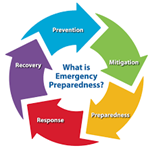
An emergency management committee should never find themselves off the wheel of emergency preparedness planning.
Consultation
An emergency plan should be done in consultation with all stakeholders affected by the plan. These may include facility personnel, neighbours, local authorities, the school campus or emergency services. Consider whether there are tenants that use your facility i.e. other denominational gatherings, community support groups, etc... These stakeholders may have an important addition to your plan that your safety team would not have considered due to the different times and effects that general life has on a gathering / event.
Writing the emergency plan
Specific emergency procedures are an important part of the emergency management system. They should be clear, simple, practical and achievable. They do not necessarily have to be lengthy or complex. In preparing the plan it needs to be tailored to the specific church considering relevant matters such as;
Not everyone has experience with health and safety so anybody should be able to pick up the document and understand it without much explanation.
Examples of important inclusions in an emergency plan
An emergency plan may include practical information such as;
Contacting Emergency Services
When an emergency occurs and emergency services are contacted, the operator often asks for specific information required to assist in dispatching the most appropriate response to your emergency. It is important that this information be at hand - a template poster can be found in the resource tab. Examples of this information can include;
If your site is attended to by emergency services, directions given by workers must be complied with.
Access to the Emergency Plan
Emergency plans should be readily accessible by all who attend the site. A summary of the key elements can be displayed on a noticeboard. Every time it is updated, it should be communicated with all relevant stakeholders and then practiced at the first opportunity.
Training in Emergency Procedures
Workers and volunteers must be adequately trained in emergency procedures. Arrangements for information, training and instruction must be set out in the emergency plan itself.
Training mechanisms may include but are not limited to;
Reviewing Emergency Plans
The currency of the emergency plans is important to ensure they remain effective. After an emergency it is important to debrief on what worked and what did not - this is information you would use to update and revise your emergency plan. Other factors may include but are not limited to;
Managing the risk to health and safety is a duty that reduces the severity of injury or illness and promotes awareness of potential hazards. In the case of fire management, it may mean the difference between the loss of life and loss of property. It should always be remembered that loss of property can be replaced and handled but the loss of life cannot. It will depend on the nature of the site, the size and location, the hazards and chemicals stored on the site as to the factors that need to be taken into account when deciding what fire management needs to be provided.
Fire is the rapid oxidation of material/s in the exothermic chemical process of combustion, releasing light, heat and various reaction processes. The potential for damages to both person/s and property is very high when arrangements for the event of a fire are not prepared and practiced. The main objective during a fire is to protect people.
There are three elements that are required for a fire to survive. An example of this can be found on the fire triangle.
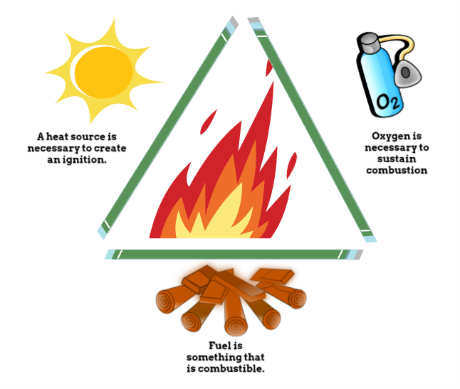
When any one of these elements is removed from the fire, the fire will extinguish. For example, if you pour water on the fire you are cooling the heat and hence the fire is extinguished. If you cover the fire you are starving it of oxygen and the fire is extinguished. If you remove the matter that is fueling the fire i.e. carbon matter, gas, electricity, then the fire will extinguish. The caveat here is that fire is so destructive that often the fuel that initiated the fire becomes part of multiple fuels as other items begin to burn. i.e. a gas fire starts and the gas is turned off - that initial fire may be out but the carbon matter around it may have ignited to start another fire.
Knowing how to extinguish a fire is a skill that should be taught at an accredited level only with properly trained personnel. The learning in this section is for information purposes only - if you have not been properly trained to fight a fire then you should immediately call emergency services in the event of a fire or allow those that have been trained to take the lead in the situation.
Types of fires and their correlating extinguishers.
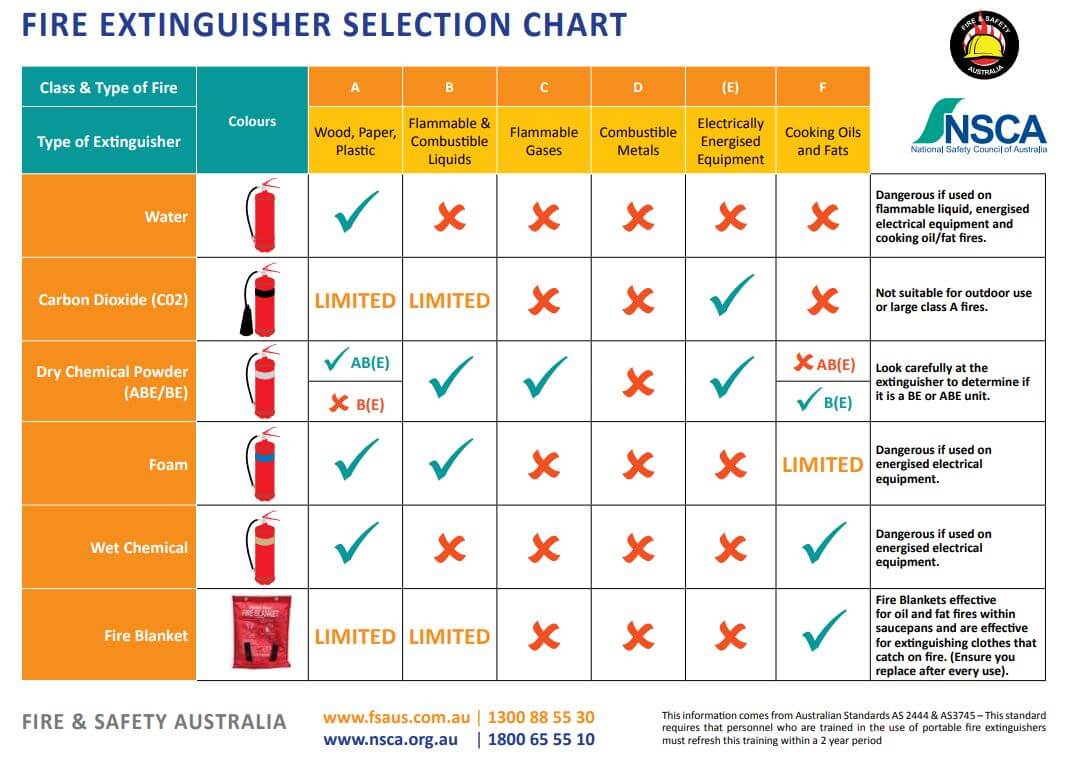
Combustible Fuels
Typical fire fuels include;
Knowing about fire fuels will make it easier to recognise the many fire hazards that could be present on your site.
A little known fact - moist grass clippings generate heat and when the gas that they produce is exposed to oxygen, this occurrence causes the material to ignite and catch fire. Piles of grass clippings are a dangerous practice and should be reconsidered for a safer method of disposal.
Sources of Heat
Fires are started and kept going by heat. A key element to the prevention of fire is to remove heat sources that are potential risks - or keep them away from combustible fuels.
Open flames and sparks are a common source of heat that will ignite a fire;
Highly flammable materials such as flammable gases and vapours can be ignited by sparks. Some examples of items that can spark are;
Surface heat is a common result from items that have electricty running through them for long perods of time or sit on stand-by. Examples of this are;
Electrical Equipment and Cable Management
To minimise electrical malfunction risk in the church, it is important to manage the electrical equipment in a specialised register and inspection log. The training required to perform this task is an accredited course, UEENEEP026A - Conduct In-Service Safety Testing of Electrical Cord Connected Equipment and Cord Assemblies. Hazards from electrical equipment or installations may arise from;
A hostile operating environment is exposure to mechanical damage, moisture, heat vibration, corrosive substances or dust.
A person with this accredited qualification must attend to your asset register and individually test each item with;
Regular inspection and testing should be ensured in accordance with the Australian Safety Standard AS3760:210. A risk assessment should be carried out to determine how often electrical equipment should be tested in your church with consideration to the hazards from electrical equipment or installations. In any case, all electrical equipment should be tested at least once every 12 months and logged in a special testing logbook.
Testing and tagging the electrical equipment will determine whether there are any potential risk that could cause malfunction, potential ignition sources and operator burns or electrocution.
Role of Fire and Rescue NSW (FRNSW)
FRNSW are a government funded service provided to;
These responsibilities are underpinned by these four key principles;
FRNSW provide commuinty engagement to help prevent fire, injury and loss by means of;
Only those that are trained to use firefighting equipment should fight a fire and then only if it is safe to do so.
Fire Safety Certificates and Statements
Under the provision of the Environmental Planning and Assessment Regulation 2000, owners of buildings have a legal obligation to supply the Commissioner of the NSW Fire Brigades with a copy of a fire safety certificate statement listing the fire safety measures applicable to their building.
This requirement applied to public buildings including but not limited to schools, shared accommodation buildings, churches, offices, etc.
Each building requires a fire safety certificate to be displayed prominently within the building. This will list the essential equipment services (fire extinguishers, emergency lighting, etc.) required. An annual statement must also be displayed. Both documents must be completed by a suitably qualified person. Significant penalties may be applied.
Some of the essential critical fire safety measures that would be included on an annual safety statement are;
For further information, you can contact the Fire Safety Division of the Fire Brigades. www.fire.nsw.gov.au/fire-safety/building-fire-safety
Providing immediate and effective first aid to people who have become injured or ill may reduce the severity of the injury or illness and promote recovery. In some cases, it may mean the difference between life and death.
First aid arrangements will vary from one place to the next. It will depend upon the nature of activities undertaken on the site, the type of hazards present on the site, the size and location of the site as well as the number of people that attend the site. All of these factors need to be taken into account when deciding what first aid requirement needs to be provided.
In todays climate of litigation there are fears that by performing first aid on a person there is risk of personal liability. During training this fear is allayed - by operating within the training and only providing treatment that is trained, no first aider can be found personally liable.
Nearly all Australian states and territories have in place good Samaritan legislation to ensure that people who step forward to provide emergency medical assistance are not held legally liable for their actions provided they act in good faith (Civil Laws (Wrongs) Act 2002 (ACT) s 5; Civil Liability Act 2002 (NSW) s 57
The Risk Management Process
The following is important to involve in the assessment of what approach you will take towards your first aid facilitation;
Giving the opportunity for consultation involves the sharing of information and the opportunity for feedback. It should be done before making decisions about health and safety matters.
Section 47 of the WHS Act 2011
A person conducting a business or undertaking must consult, so far as reasonably practicable, with workers who carry out work for a business or undertaking who are (or likely to be) directly affected by a work health and safety matter.
First Aiders Regulation 42 - Duty to provide first aid.
A person conducting business or undertaking must ensure that an adequate number of workers are trained to administer first aid at the workplace or that workers have access to an adequate number of other people who have been trained to administer first aid.
First aiders must hold a nationally recognised certification issued by a rescued training organisation (RTO) for the nationally endorsed first aid unit/s of competency.
First aid can be provided in your local church in a number of way;
Additional Training for First Aiders
First aiders should attend training on a regular basis to refresh their first aid knowledge and skills and to confirm their competence to provide first aid. Refresher training in CPR should be undertaken annually and first aid qualifications should be renewed every three years.
It is a recommended code of practice to undertake additional first aid training to respond to specific situations at their church i.e. where severe allergies could be a potential risk, first aiders should be trained to respond to anaphylaxis.
Number of Trained First Aiders
The number of first aiders depends on the risk level at your local church. Therefore, the risk management process is an important factor in assigning the number of trained first aiders.
The following ratios are recommended;
The number and type of trained first aiders can be further refined by the following five-step guide;
First Aid Procedures
The local church should develop and implement first aid procedures to ensure that everyone has a clear understanding of first aid in the church. The procedure should cover;
Record Keeping
A record of first aid treatment given should be kept by the first aider and reported to the board on a regular basis to assist reviewing first aid arrangements and assessing any potential hazards that are causing risk. First aid treatment records are subject to requirements under Health Records Legislation.
The Nature of Potential Hazards in the Church
Certain work environments have a greater risk of injury and illness due to the nature of work or activity carried out and the nature of the hazards on site. For example, a food pantry will have a greater risk of injury requiring immediate medical treatment than the person working in the church library. This is why it is important to undertake the Risk Management process to determine the types of potential hazards that cause risk and the first aid arrangements that you will have in place in the event of an injury.
Signage
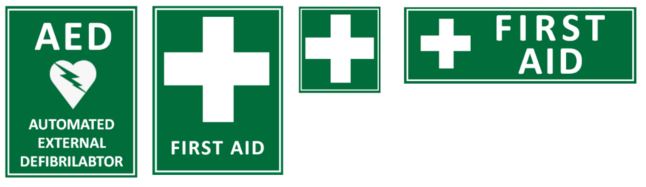
The Australian Standard for safety signs for the occupational environment states that safety and emergency signs should comprise of white text in a green background.
Displaying well-recognised first aid signs will assist in an easy experience locating the equipment and/or facilities - especially in the event of an emergency.
Other First Aid Equipment and Facilities
In addition to first aid kits, it should be considered whether other first aid equipment is appropriate according to the results from the risk management process. Some examples may be;
NNSW First Aid Arrangements
The North New South Wales Conference can help to facilitate the training of the local church first aid team. Please make contact if you seek to enquire through the main office line (02) 4951 8088
Risk management is an important process that safeguards the church, its workers, members and guests. It is a legal requirement and compliance helps you focus on the dangers that really exist in the environment and have the potential to cause real and lasting harm.
The law does not expect you to eliminate all risk, but you are required to "as far as reasonably practicable" make efforts to protect people and reduce the danger.
Risk management is about being pro-active in keeping people safe not re-active once someone has been injured or killed.
What is the difference between a hazard and a risk?
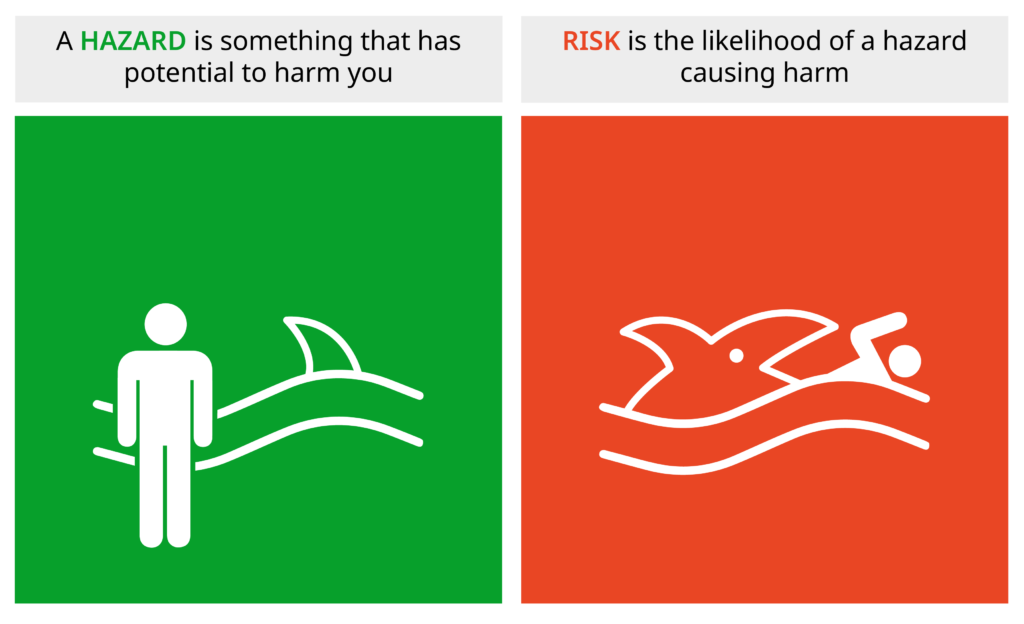
Hazards and risk are not the same things. A hazard is an act or condition that has the potential to cause damage to plant or equipment or result in illness or injury. A risk is the likelihood of a specific consequence occurring and determining to what degree.
There are three main stages to risk management;
A systematic approach to the management of hazards and their associated risks.
The aim of this process is to minimise the likelihood or consequence of a particular risk to a level that is minimal and acceptable. The risk management process includes;
Hazard Identification
This is an important part of risk management as without the identification of the hazards the risks cannot be managed. This is the process of examining each area, including but not limited to, the access and egress, pathways, equipment, office areas, the kitchen and food storage areas, the grounds, etc. etc.
Here are some tips to help you identify hazards;
Remember that hazard identification, assessment and control is an ongoing process and is best done in consultation with all stakeholders i.e. facility personnel, neighbours or sharers of the site, frequent visitors or contractors and tenants. It should be undertaken at various times such as;
Other hazards
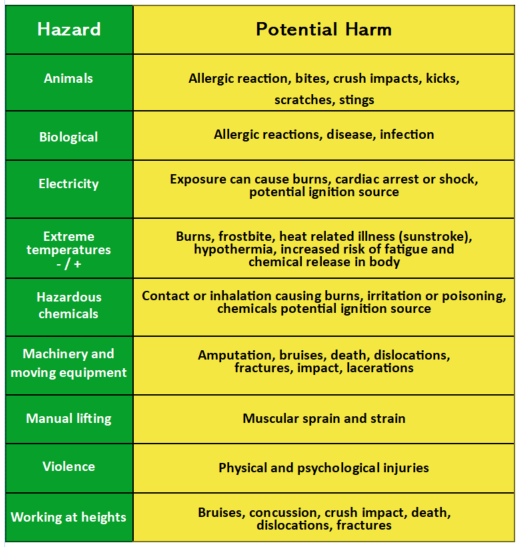
In today's climate, it is important to remember that hazards are not conditions that are limited to physical illness or injury. A hazard can include conditions such as;
The Seventh-day Adventist church, through Adsafe, provides protective services for children and people at risk, with specific emphasis on sexual, physical and mental abuse. As well as managing and supporting people affected by abuse, Adsafe seeks to mitigate risk by requiring all adults aged 18 and over who are volunteering/working with children aged under 18, plus church leaders (Elders and Board/Leadership Members) to undertake three requirements:
The on-line learning portal is located at: https://elearning.adsafe.org.au/ Further information about Adsafe can be found on their website at: www.adsafe.org.au
Adsafe can be contacted toll-free on 1800 220 468 or by lodging an on-line enquiry.
Risk Identification
Once a hazard has been identified, it is paramount that the risks associated with said hazard are investigated. There may be contributory factors that may not be obvious which is why we perform a risk assessment. Here are some examples;
Risk Assessment
It is now necessary to gauge the likelihood of an injury occurring alongside the probable consequences. A risk assessment will outline these key factors;
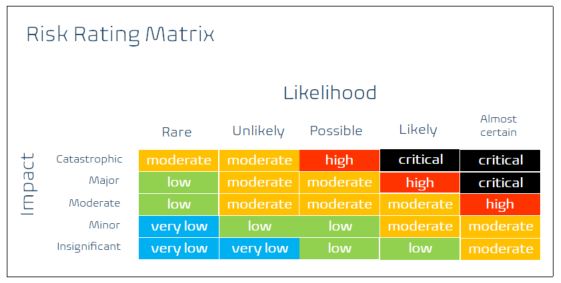
Risk Rating Matrix
Using the risk rating matrix will help you to decide what action needs to be taken as any residual risk after controls have been applied must be in the low and very low range.
Risk Control
When applying controls to a potentially risky environment/activity, it is important to know the level of authority you have. Urgent action is required for risks assessed as having Critical or High consequences. These actions may include;
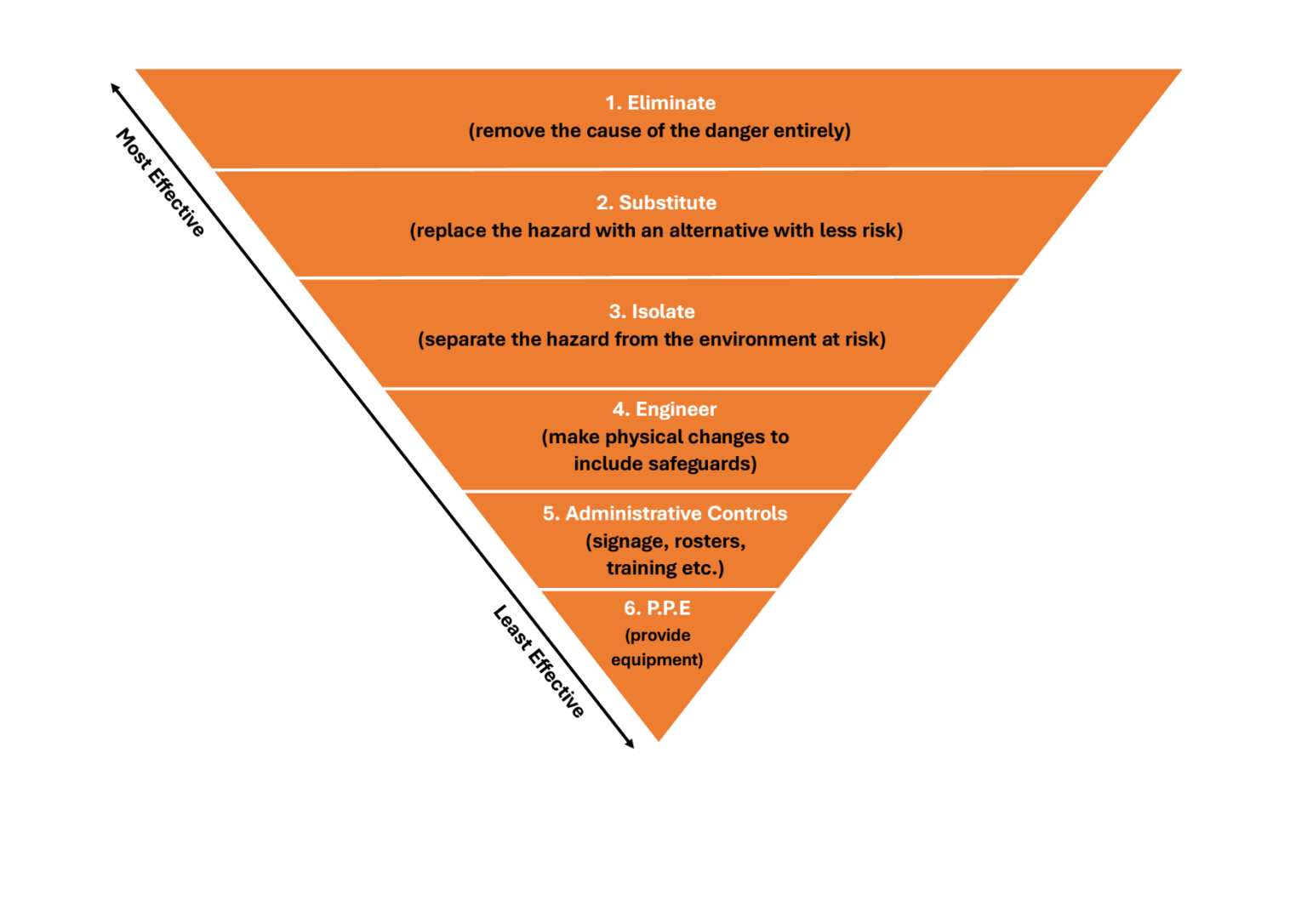
The Hierarchy of Controls (pictured above) is applied to decide the measures used to reduce/eliminate risk. Control of any given risk generally involves multiple measures and should always aim as high on the list as practicable.
Implementing and Documenting Controls
Always remember to prioritise the most important things first. i.e. Hazards that have moderate to critical risk rating - think about consequences that could result in death or permanent disability.
All stakeholders should be aware of any controls that have been implemented. Communication should include;
Documentation is one of the most important steps in risk management. This ensures that all stakeholders know what has been used, what has worked and what caused further risk and was rejected for more effective controls. Adequate record keeping will also demonstrate due diligence in the event of an investigation or legal proceedings and the question of liability arises.
Records should demonstrate the proper process and include information about the hazards, associated risks and the control measures implemented. Including any evidence is also important. i.e. risk assessments, safe work method statements (required for high-risk work), minutes from meetings, email communique, photographs, checklists, log books, etc.
Monitoring and Reviewing
The monitoring of the controls implemented, as suggested above, is important to ensure that they are not contributing to the worsening of the original hazard or creating new ones.
This monitoring goes hand in hand with the review of risk management. It should happen when there is a change to the workplace including systems, tools, machinery, equipment or when the validity of the process is potentially out of date - you can check out our resources page for templates.
Further Support
Please make contact with the North New South Wales Conference for further support and assistance should you require it. Contact us on (02) 4951 8088 or email the Conference Safety Coordinator at [email protected]
Don't forget to follow onto the next tab and check out the resources there for you and your church.
You can also register for your certificate there with your name and email address and your Certificate of Completion will be sent to you. Thank you for keeping your church safe.


The North New South Wales Conference of the Seventh-day Adventist Church acknowledges the First Nations People as the traditional custodians of this land. Read here the full acknowledgement.